
Dopamine Hierarchy: How Addiction Hijacks Your Brain
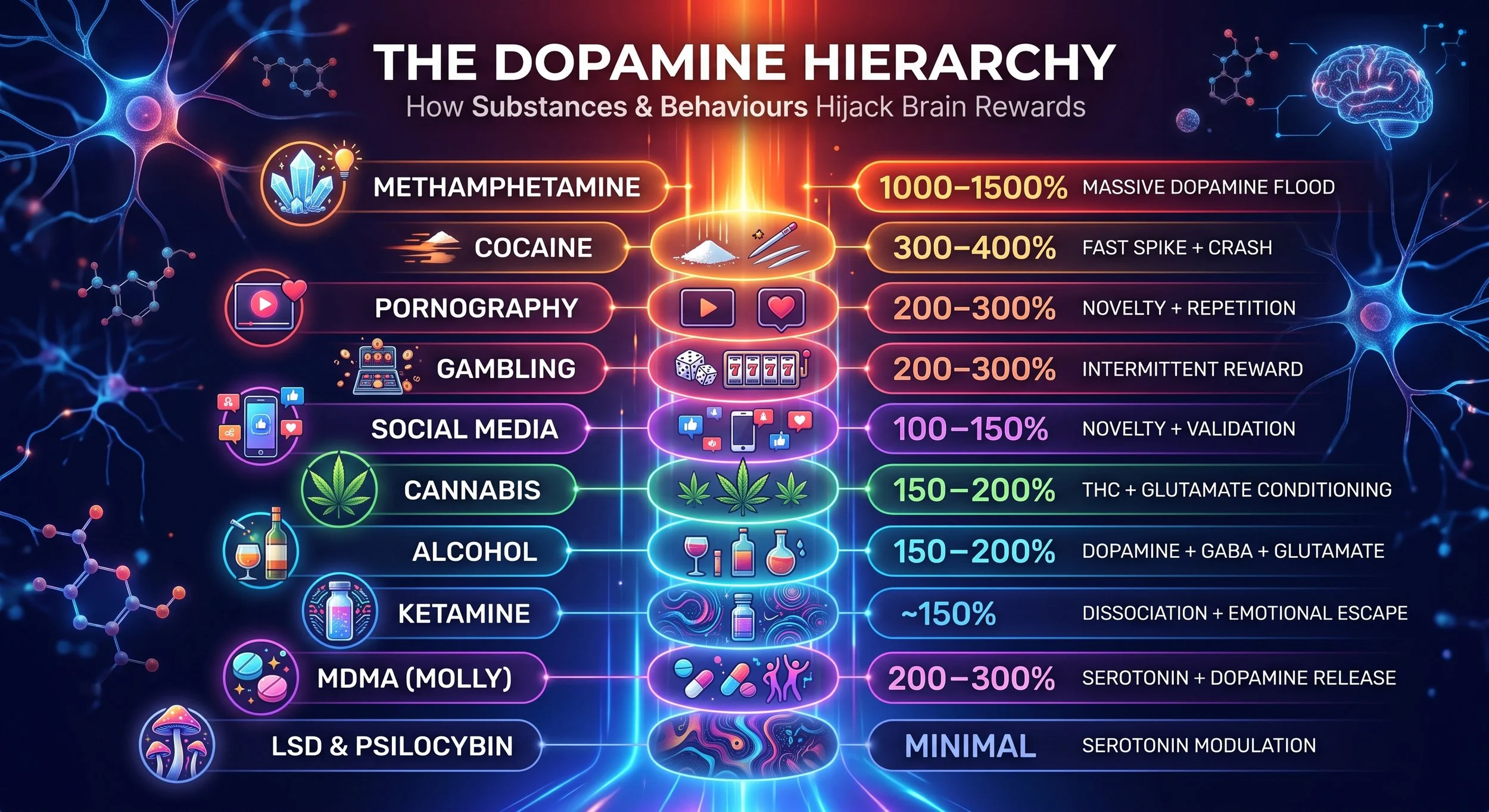
Dopamine is the brain’s reward and motivation neurotransmitter. It drives desire, learning, reinforcement, and the pursuit of pleasure. In addiction, dopamine becomes weaponized — pushed far beyond natural levels — creating powerful neurological conditioning that can override judgment, values, and long‑term goals.
Different substances and behaviours release dopamine at dramatically different intensities. Understanding these levels helps clients grasp why certain addictions escalate quickly, why some feel impossible to moderate, and why recovery requires time for the brain to recalibrate.
Explore dopamine, reward pathways, and neuroplasticity.
How Dopamine Is Measured
Baseline dopamine release from healthy activities (food, social connection, exercise) ranges from 100–150% above resting levels.
Addictive substances can push dopamine to 300–1500%, depending on potency, route of administration, and frequency of use.
Below is a clinically informed hierarchy of dopamine release intensities.
1. The Highest Dopamine Spikes: Methamphetamine & Cocaine
Methamphetamine — 1000–1500% dopamine increase
Methamphetamine produces one of the largest dopamine surges known in addiction medicine. It releases dopamine rapidly and prevents its reuptake, flooding the synapse.
Effects include:
Extreme euphoria
Hyperfocus
Compulsive repetition
Rapid tolerance
Severe anhedonia afterward
Meth creates instant conditioning, which is why even one use can dramatically alter reward pathways.
Explore stimulant addiction.
Cocaine — 300–400% dopamine increase
Cocaine blocks dopamine reuptake, causing a fast, intense spike followed by a sharp crash.
Effects include:
Heightened confidence
Increased energy
Impulsivity
Rapid craving cycles
High relapse risk
Cocaine’s short half‑life creates a binge pattern, reinforcing compulsive use.
2. Psychedelics & Dissociatives: Dopamine Modulation Rather Than Spikes
These substances do not produce dopamine spikes comparable to stimulants, but they disrupt perception, memory, and emotional regulation, indirectly affecting reward pathways.
Ketamine — mild dopamine increase (up to ~150%)
Ketamine’s primary action is NMDA receptor antagonism (glutamate disruption). Dopamine rises modestly, but the dissociation and escape from emotional pain create psychological reinforcement.
LSD — minimal dopamine increase
LSD primarily affects serotonin receptors. Dopamine changes are subtle, but the intensity of the experience can create psychological craving for escape or novelty.
Psilocybin (Mushrooms) — minimal dopamine increase
Similar to LSD, psilocybin’s dopamine impact is small. Reinforcement comes from emotional relief, spiritual experiences, or avoidance of distress.
MDMA (Molly) — 200–300% dopamine increase
MDMA releases large amounts of serotonin, but also boosts dopamine significantly. The combination creates:
Emotional openness
Euphoria
Sensory enhancement
Reinforced social bonding
MDMA’s dopamine spike is lower than cocaine but still substantial.
Explore serotonin in addiction.
3. Cannabis & Alcohol: Moderate Dopamine Spikes With High Reinforcement
Cannabis — 150–200% dopamine increase
Modern high‑potency THC creates:
Relaxation
Distorted motivation
Emotional blunting
Reinforced avoidance
Habitual use patterns
Cannabis’s dopamine spike is moderate, but glutamate conditioning makes it highly reinforcing.
Explore cannabis addiction.
Alcohol — 150–200% dopamine increase
Alcohol increases dopamine while boosting GABA and suppressing glutamate. This triple effect creates:
Relaxation
Lowered inhibition
Emotional numbing
Impulsivity
High relapse risk
Alcohol’s dopamine spike is similar to cannabis, but its multi‑neurotransmitter impact makes it more dangerous.
4. Behavioural Addictions: Dopamine Without Substances
Behavioural addictions can produce dopamine spikes comparable to drugs — especially when combined with emotional triggers, novelty, or intermittent reward.
Pornography — 200–300% dopamine increase
Pornography creates dopamine spikes similar to cocaine’s lower range due to:
Novelty
Escalation
Visual stimulation
Rapid repetition
This leads to:
Compulsive use
Escalation to more extreme content
Sexual dysfunction
Emotional detachment
Explore porn addiction.
Gambling — 200–300% dopamine increase
The dopamine spike comes from intermittent reward, not the win itself. The unpredictability creates powerful reinforcement.
Effects include:
Compulsive chasing
Risk escalation
Financial destruction
Emotional volatility
Social Media — 100–150% dopamine increase
Social media triggers dopamine through:
Novelty
Likes and validation
Endless scrolling
Intermittent reward
Social comparison
While lower than drugs, the frequency of hits creates chronic dysregulation.
Explore digital addiction.
Why These Spikes Matter Clinically
High dopamine spikes create:
Rapid conditioning
Strong cravings
Compulsive repetition
Emotional dysregulation
Anhedonia during withdrawal
Difficulty moderating
High relapse risk
The higher the spike, the harder the recovery — and the longer the brain needs to return to baseline.
Explore anhedonia and PAWS.
Why Recovery Is Worth It
When clients abstain long enough for dopamine receptors to heal:
Pleasure returns naturally
Motivation stabilizes
Stress becomes manageable
Excitement feels healthy again
Emotional regulation improves
Identity rebuilds
Life becomes meaningful without artificial spikes
This is the long‑term payoff: a brain that can feel joy, connection, purpose, and excitement without being hijacked.